


It usually starts small. A few days without a bowel movement. A belly that seems a little rounder and a little crankier than usual. A kiddo who suddenly doesn’t want dinner, or who sits on the potty and says it “won’t come out.” If you’re anything like the mamas I talk to every week, you’ve probably googled slow digestion in kids at 11pm and come away with either “totally fine, just add fiber” or something far scarier.
Here’s what I want you to know first: slow digestion in kids is very often a nervous system signal, not a sign that something is broken. Digestion only runs smoothly when the body feels safe enough to rest. When a child’s nervous system is stuck in high alert, digestion is one of the first things it quietly turns down. So the question isn’t only “what is my child eating?” It’s also “how much is my child’s body carrying right now?”
What Is “Slow Digestion,” Really?
When I say digestion is slowing down, I mean the whole process of moving and processing food is running behind. The clinical word for that movement is motility, which simply means how well the gut moves food along from one stage to the next. When motility slows, food sits longer than it was designed to. That can show up as constipation, bloating, gas, a full or uncomfortable belly, or a smaller appetite.
Most of the time, this is what doctors call functional constipation. That means there’s no structural or disease-related cause. The system is all there. It just isn’t communicating as smoothly as it was designed to.
And that word, communicating, is the key. Your child’s gut doesn’t run on its own. It’s in constant conversation with the brain through the nervous system, especially through the vagus nerve, a long nerve that connects the brain to the heart, lungs, and digestive tract. The vagus nerve is a major part of the parasympathetic nervous system, the “rest and digest” side of the body. Its opposite, the sympathetic nervous system, is the “fight or flight” side.
Here’s the simple version. When the body feels safe, rest and digest leads, and digestion gets the green light. When the body feels under pressure, fight or flight takes over. Then digestion gets pushed to the back of the line, because in a true emergency, breaking down lunch isn’t the priority. That’s not the body failing. That’s the body doing exactly what it was designed to do. The trouble comes when a little body stays in that protective mode for too long.

Why a Child’s Digestion Slows Down
Every child is different, but a few common stressors tend to slow digestion down. Here are the ones we see most often in kids.
Big Transitions
Starting school, a new sibling, moving, potty training, or a parent going back to work can all put a nervous system on alert. Kids don’t always have the words for “this feels like a lot,” so their bodies say it for them.
Holding It In
Many kids start holding bowel movements because they’re busy playing, nervous about a school bathroom, or remember one that hurt. Holding makes the next one harder, and the cycle builds on itself. This is one of the most common patterns we see in little ones.
Changes in Routine and Food
Travel, late nights, less water, more snacks, and fewer vegetables all add up. Hello, holiday season. None of these are “bad.” They simply fill the bucket faster than a child’s body can process.
Less Movement
Moving the body helps move the gut. Shorter days, more screen time, and more time sitting in the car or at a desk can quietly slow everything down.
Pregnancy and Postpartum, Too
Mama, this isn’t only about your kids. Hormone shifts in pregnancy naturally slow digestion, and the postpartum season brings little sleep, big feelings, and a nervous system running on empty. If your own digestion has been sluggish lately, your body is telling you the same story.
What the Research Says About Constipation in Kids
If you’re worried you’re the only one dealing with this, you’re not. A 2018 review in The Journal of Pediatrics pooled 35 studies on functional constipation in children. The researchers estimated that about 9.5% of children worldwide experience it, at similar rates for boys and girls. They also found it was associated with diet, lifestyle, and stressful life events.
That last finding matters to me. It confirms what parents already feel in their gut (pun intended): stress shows up in the body. I also want to be honest with you. Research on chiropractic care for digestion in kids is still early, and most of it comes from small case reports rather than large trials. So I’m not going to promise you that adjustments will make your child go to the bathroom. What I can tell you is how we support the system that runs digestion in the first place.
What Chiropractic Support Looks Like at Powerhouse
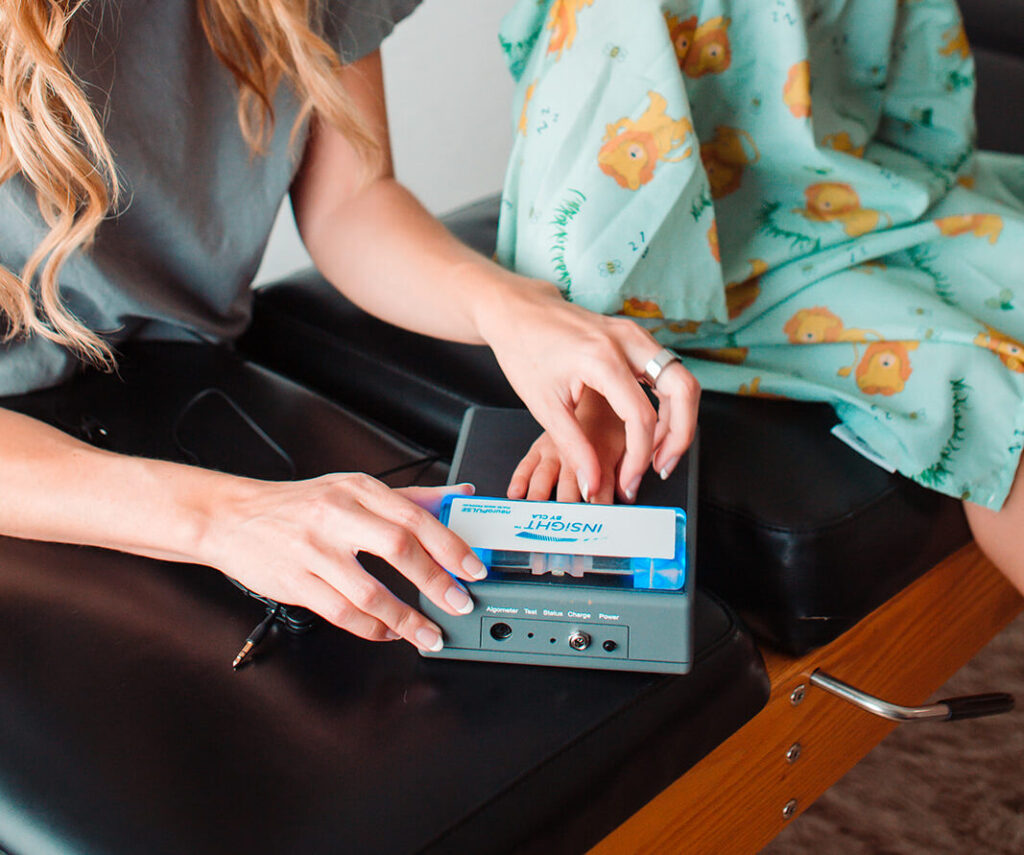
When a family comes to us with digestion concerns, we don’t start by guessing. We start with an INSiGHT nervous system scan at the very first visit. It shows us, in real numbers, how much stress your child’s nervous system is carrying and how well it’s shifting between fight or flight and rest and digest.
From there, care is personal. Your child’s care plan is built around what their scan and history actually show, using gentle, age-appropriate adjustments designed to support the nervous system. The goal isn’t to force the gut to move. The goal is to lighten the load on the nervous system, so your child’s body can get back to doing what it already knows how to do.
We rescan every 12 visits, so you can see what’s changing instead of wondering. And we always work alongside your pediatrician, never instead of them. You can read more about how we care for families on our Why Choose Us page.
What to Expect From Your First Visit
Your first visit is all about getting to know your child. We’ll sit down for a conversation about your family’s history, what you’ve been noticing, and your goals, and then we’ll complete the INSiGHT scan. At your second visit, I’ll walk you through the results, share a personalized care plan, and answer every question you have. You can see each step on our Your Visit page.
Gentle Ways to Support Your Child’s Digestion at Home
Make the bathroom a calm, unhurried place. Try a few relaxed minutes on the potty after meals, when the gut naturally wants to move. A small footstool helps little legs feel steady and supported, and that sense of safety matters for the nervous system.
Keep water and movement easy to reach. Offer water throughout the day, not just at meals. Then build in movement that feels like play: a walk after dinner, a dance party, or ten minutes outside.
Notice the pattern, not just the problem. Jot down when digestion slows. Is it after travel, a busy week, short sleep, or a big change at school? Those patterns tell us so much more than a single hard day.
Fill their cup with connection. A nervous system that feels safe digests better. Slow, cozy moments, like belly breathing together or a gentle clockwise tummy rub at bedtime, help your child’s body shift into rest and digest.
And please, call your pediatrician right away if you notice blood in the stool, vomiting, a fever, a swollen or very painful belly, weight loss, or a newborn who isn’t having bowel movements. Those deserve a closer look from your child’s medical team.
Frequently Asked Questions
What causes slow digestion in kids?
Slow digestion in kids is often linked to stress on the nervous system, big transitions, holding in bowel movements, changes in routine or diet, low water intake, and less movement. When the body is in fight or flight mode, digestion naturally slows down.
How does the nervous system affect digestion?
The nervous system controls how the gut moves and processes food. The vagus nerve carries messages between the brain and the digestive tract. When a child feels safe, the “rest and digest” system supports digestion. When a child is stressed, the body turns digestion down.
Can stress cause constipation in children?
Yes. A 2018 review in The Journal of Pediatrics found that functional constipation in children is associated with stressful life events, along with diet and lifestyle factors.
How common is constipation in kids?
Very common. Research estimates that about 9.5% of children worldwide experience functional constipation, with similar rates in boys and girls.
Can chiropractic care help with my child’s constipation?
Research on chiropractic care for digestion in children is still early. Chiropractic care doesn’t treat constipation directly. Instead, it supports the nervous system that helps regulate digestion, and it works alongside your pediatrician’s care.
When should I call the doctor about my child’s digestion?
Call your pediatrician if your child has blood in the stool, vomiting, a fever, a swollen or very painful belly, weight loss, or if a newborn isn’t having bowel movements.
The Bottom Line on Slow Digestion in Kids
Slow digestion in kids is usually the body’s way of saying it’s carrying more than it can easily process right now. It isn’t a verdict on your parenting or your child’s body. When we lower the load, support the nervous system, and give the body the safety it needs to rest and digest, it knows how to find its way back. So here’s my question for you: what might your child’s body be asking for this season?
Ready to Listen to What Your Child’s Body Is Saying?
If you’re in Chandler, Phoenix, or the surrounding areas and your little one’s digestion has been running slow, we would love to meet you. We’ll look at what’s really happening in their nervous system and build a plan around your child, not a checklist. Book your child’s first visit at the location closest to you, and let’s walk through it together.

